October 29, 2026
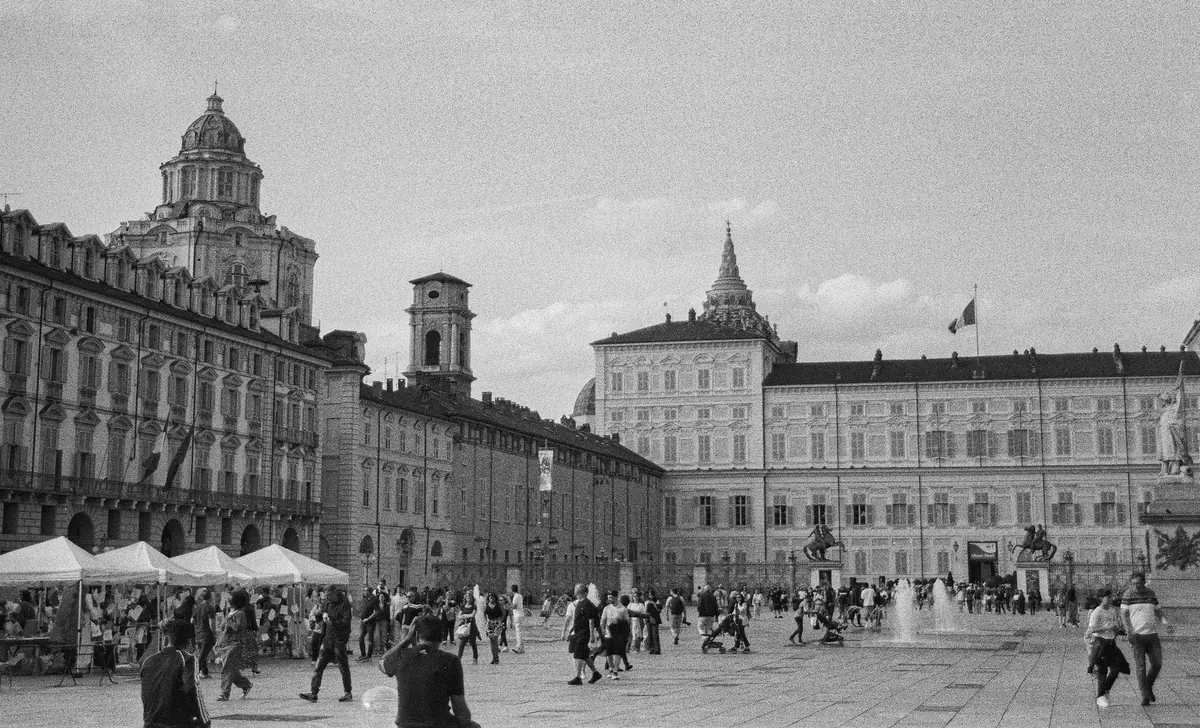
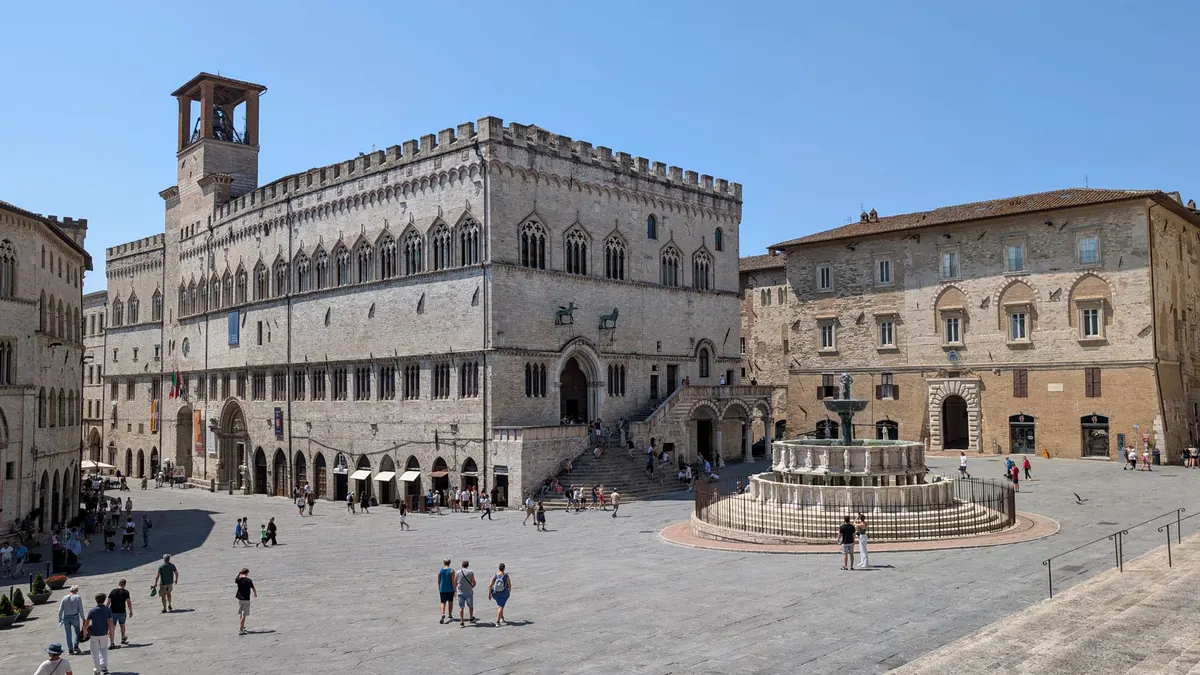
Most visitors look at a piazza. Very few listen to it. Yet a square in Italy has a sound signature as distinct as its stonework: the metal rattle of a shutter at dawn, the small ceramic click of a cup set on a saucer, the particular echo of heels on polished stone at half past eight in the evening. Stay in one place long enough — a bench, a bar table, the steps of a church — and the day reveals itself in layers, almost like a score. What follows is a listening guide, roughly in order, for anyone willing to spend a day doing very little in a very specific place.
Before Seven: Shutters, Water, and the First Engine
Dawn arrives in a piazza as a series of mechanical sounds. In the half-light you hear the serrande — the corrugated metal shutters — going up one by one, each with its own personality. There is the clean rattle, the stuck groan, the shriek that has needed oil since last summer. Then water: the bar owner hoses the pavement in wide arcs, the butcher sluices his step, and somewhere a broom pushes the water towards a drain with a sound like restrained applause.
Delivery vans reverse with their warning beeps. Tailgates bang. Crates of milk and tomatoes land on the cobbles with a hollow knock that carries further than you would expect. In smaller towns the church bell sets the hour, and it is worth knowing that bells are not background decoration to the people who live here. They are information, and the person beside you on the bench may well glance up at the third strike to check the time.
The Coffee Hour: Ceramics, Paper, Low Voices
Between seven and half past nine the piazza performs its most reliable concert. The espresso machine hisses, gurgles, releases a small cloud of steam; the grinder whines briefly and stops. The portafilter is knocked out against the bar with a dull clack. A cup meets a saucer, a spoon circles twice and is set down. Someone tears a sugar packet. Someone else folds a newspaper — the Gazzetta, the local daily — and the paper crackles in a way that seems louder than the conversation around it.
This is the hour when the square is at its most talkative and its quietest at the same time. Morning voices in Italy are low, still half asleep. The greetings are short: a nod, a buongiorno, a vague answer to a question nobody entirely expects an answer to. Orders are clipped to the point of code. Listen for the barman's shorthand and you will hear a whole dialect of the trade in six syllables.
Mid-Morning: The Market and Its Argument
By ten, the piazza has a market on it, or a bank queue, or a school group, and the acoustic changes entirely. Vendors call prices in a sing-song that is closer to recitative than speech; the calls overlap and loop, and no single voice is meant to be understood so much as felt. Crates are stacked, a scale beeps, a van door slides shut with a heavy clang.
Modern life has added its own small sounds here: the double beep of a card reader, the tinny notification from a phone in someone's pocket, the electric whine of a street cleaner's leaf blower. A three-wheeler Ape turns into the square and its engine is so distinctive you can identify it before it appears. Dogs greet each other. A child runs the length of the square and the slap of small shoes on stone pulls every head towards her for a second, then releases them.
The Afternoon: A Square With the Volume Down
Then the square empties, and the listening gets interesting. Shutters come down with a rattle, a final clack, and the light goes out behind them. The heat has its own sound, which is to say almost none. Footsteps become the loudest event in the city. A pigeon takes off with a clatter of wings that sounds like an accident.
This is the hour to notice the acoustics of the space itself. Stand in the middle of the square, then stand in a corner under an arcade, and clap once. The difference will surprise you: porticoes swallow sound, open squares throw it back. A single ball bounced against a wall can travel the length of a piazza. Somewhere a television murmurs through an open window, a scooter passes, a fountain runs. If there are trees, there may be cicadas. Nothing else is required of you for at least an hour.
A piazza in the afternoon is not empty. It is holding its breath.
The Evening Return: Heels, Balls, and Aperitivo
Around six, the shutters go up again and the energy is different — faster, brighter, more social. This is the start of the passeggiata, and it has a sound of its own. Heels on stone, unhurried and rhythmic. A scooter pulling up and being parked. Two men stopping in the middle of the square to talk, blocking the way, entirely unbothered.
Children reclaim the space with a football against a wall — thud, thud, a shout, a laugh — and a bicycle bell cuts across it. The bars put out their chairs, and the scraping of plastic legs on paving stones is the official signal that aperitivo has begun. Ice drops into a glass. A bottle is opened. Someone stirs a spritz and the spoon tinkles against the sides.
There is also a verbal switch worth catching. At some point in the early evening, buongiorno turns into buonasera, and it happens quite precisely — usually around dusk, sometimes as soon as the light turns gold. Listening for that change tells you more about the season than a calendar does.
Dinner Outdoors, and the Last Hour
Tables on the Stones
Restaurant tables spill into the square and the soundscape becomes domestic. Chair legs scrape. Cutlery is laid with a bright clink. Glasses touch. A waiter calls something towards the kitchen door in a sing-song, and the kitchen answers with running water, a pan, a range hood. Laughter arrives in bursts, and the whole square becomes a series of overlapping dinner parties, each one slightly louder than it was an hour earlier.
The Square Exhales
Late in the evening the sounds thin out and slow down. Chairs are stacked with a clatter of metal legs. A broom works its way across the paving. A bottle goes into a recycling bin and the noise of it is startling in the dark. Three people remain on a bench, talking quietly, and their conversation has a different rhythm from the daytime — longer pauses, softer endings.
The church clock strikes. A scooter leaves. Then the fountain is the loudest thing again, exactly as it was at dawn, except that now you can hear it properly.
How to Listen Well: A Practical Plan
You do not need a recording device or a specialist's ear. You need a seat and a couple of hours. A few things that help:
- Choose a bench over a bar table. Tables come with conversations that pull you in. A bench lets the square happen around you.
- Do three sittings rather than one long day. Early morning, mid-afternoon and after eight in the evening give you the sharpest contrasts without exhausting you.
- Leave the headphones at home. It sounds obvious. It is the single most useful thing on this list.
- Order something small and stay put. A coffee in the morning, a glass of something in the evening. Nobody will move you on.
- Learn two words of greeting — buongiorno and buonasera — and use them. Being greeted back changes what you are listening to; you stop being an audience and start being part of the room.
- Go in a shoulder season if you can. In August the square is often filled with the same sound as everywhere else. In May or October you get the local version.
Finally, resist the urge to name everything you hear. Half the pleasure is in sounds you cannot identify — a door somewhere behind you, a chair dragged across a floor two streets away, a voice calling a name that belongs to no one you will ever meet. Sit long enough and the piazza will tell you the shape of its day without a single word of explanation.
Photo: Ben Spadinger / Pexels